1️⃣ 📦 Getting Started With Trezor.io/Start — Preparation, Safety, and Setup
Before you ever connect your device or install software, the most important part of using Trezor.io/Start is preparing correctly. A hardware wallet is only as safe as the first decisions you make during setup, and this guide walks you through everything you should have in place before you begin. Think of this like preparing a workspace: you want clarity, comfort, and safety.
To start, make sure you have your Trezor hardware wallet ready to go. Trezor comes in two main models: Trezor Model One and Trezor Model T. Both are secure, trusted, and popular among crypto users, but Model T contains a touchscreen and supports more cryptocurrencies and features. If you’re brand-new to crypto, either device works perfectly, because Trezor.io/Start walks beginners through setup step-by-step in a clear, safe, guided interface. You will also need a USB cable to connect your device to your computer. Trezor includes one in the box, and using the original cable reduces connectivity problems.
Next, prepare a computer or laptop with a reliable browser and internet connection. The setup process requires downloading Trezor Suite, which is the official application for managing your wallet, sending and receiving cryptocurrency, and updating firmware. Make sure you use a trusted, secure internet connection — avoid public Wi-Fi and shared computers. A dedicated device is even better. The rule is simple: never rush. The safer and calmer your environment, the better the results.
Then, locate a quiet space and writing tools. Trezor will generate a recovery seed — a list of 12, 18, or 24 words — which is the single most important part of owning a hardware wallet. This seed is literally your backup to all your crypto forever. If your device is lost, damaged, stolen, or reset, this seed lets you recover everything on a new device. Because the recovery seed is so important, it must always be stored offline, never photographed, never typed into a phone or computer, never uploaded, and never spoken aloud around other people. A pen and paper work. Even better is a metal backup plate, available from many providers, so fire, water, or time can’t destroy it.
Before going to Trezor.io/Start, check something essential: phishing awareness. Criminals try to imitate the Trezor website to trick users into entering their seed. To avoid this, always type the URL yourself — never click a link from email, messaging apps, social media, or search results. Check that the URL begins with https:// and includes a padlock icon in your browser. Bookmark it once you are sure it is official. Treat this small habit seriously; it is one of the best long-term protections you can practice.
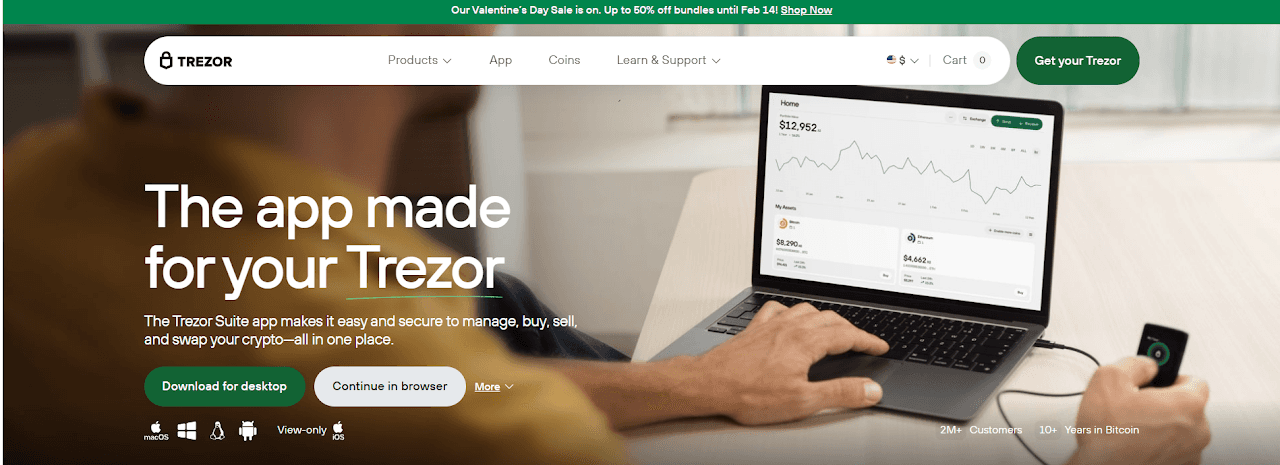
Now you’re ready to visit Trezor.io/Start, which gives you instructions to install Trezor Suite. Installing from the official website matters because third-party downloads can be modified. Trezor Suite has a clean interface where you can create a new wallet, update firmware, and set a PIN. Choose a strong PIN: don’t use birthdays, repeated digits, or sequences. Some users choose to enable an optional passphrase, also called a hidden wallet. This is an advanced feature that adds another private layer of protection. If someone gets your device and seed, they still cannot open your hidden wallet unless they know the passphrase.
Once you’re fully set up, take time to explore the interface. Do not rush to move large amounts of cryptocurrency immediately. Start small. Send a tiny test transaction. Learn how to confirm addresses. Learn how to verify details on the device screen, not only your computer screen. Trezor displays the receiving address on the device to prevent attacks called address swapping, where malware on a computer replaces the destination wallet address.
The biggest success factor in using Trezor is building safe habits early. Writing down your seed correctly, storing it in more than one secure location, and treating Trezor.io/Start as your permanent home base for software updates will keep your crypto protected long term. Preparation is everything — and preparation begins here, before one coin ever moves.